Two complementary studies from the ET4D project: consumer attitudes toward dairy, sustainability, and animal welfare — and dairy farmers’ perspectives on technology, transparency, and production practices across Europe and beyond.
What do consumers think about dairy, the environment, and cow welfare?
Understanding consumer perspectives on dairy production, environmental sustainability, and animal welfare across six European countries.
360Participants
6Countries
90%Environmentally aware
50%+Willing to pay more
About the study
As part of the ET4D project, we conducted a comprehensive consumer survey across six European countries: Poland, Germany, Denmark, Estonia, Hungary, and Turkiye. The study included 360 participants and explored consumer attitudes and behaviors related to milk and dairy products, with a particular focus on environmental sustainability and animal welfare.
Environment and cow welfare
Strong environmental awareness
Almost 90% believe individual lifestyle choices impact the environment – positively or negatively.
Willingness to change
Over 60% declared willingness to change their lifestyle to help protect nature.
Value healthy food
More than 75% said it's worth paying more for healthy food.
The value–action gap
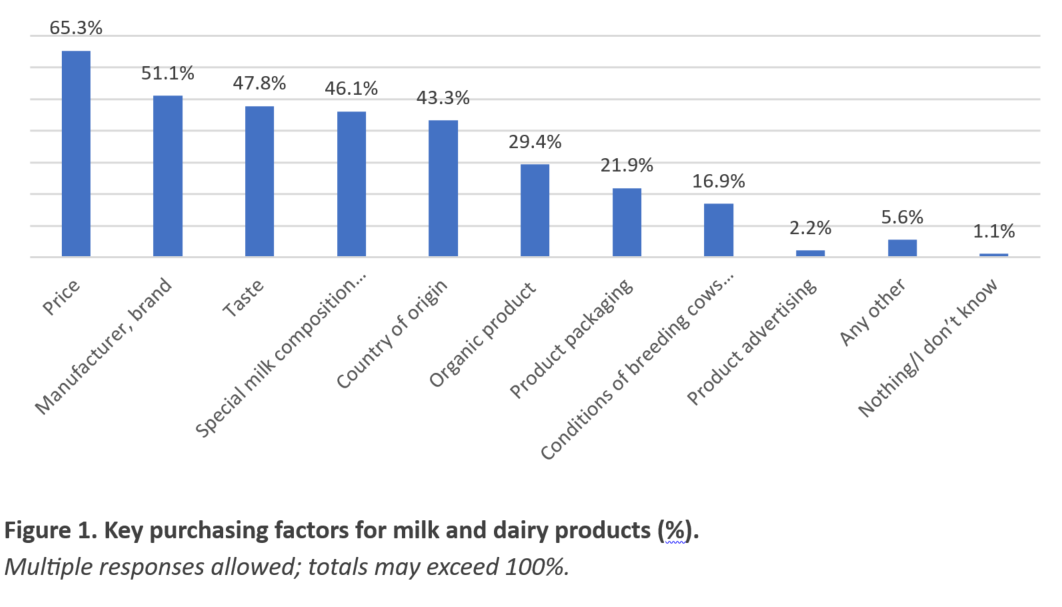
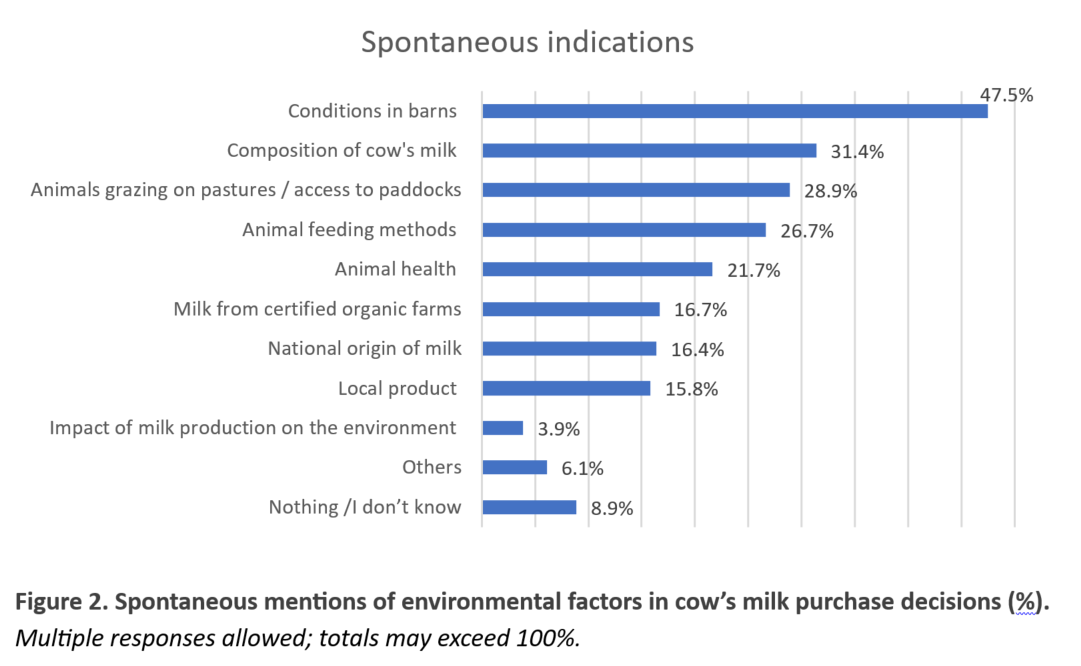
However, when it comes to purchasing decisions, traditional factors such as price, taste, and brand still dominate. Only 3.9% of respondents spontaneously mentioned the environmental impact of milk production. This highlights the need for better communication tools and clearer information.
Environmental awareness and purchasing considerations among consumers.
Growing sensitivity to animal welfare
Consumers are increasingly aware of how dairy animals are treated. When asked open-ended questions, nearly half of respondents mentioned housing conditions for cows as an important concern.
Housing conditions
Nearly 50% mentioned housing conditions for cows as a top concern.
Pasture access
29% cited access to pasture as an important animal welfare factor.
Feeding practices
27% mentioned feeding practices as a key consideration.
Animal health
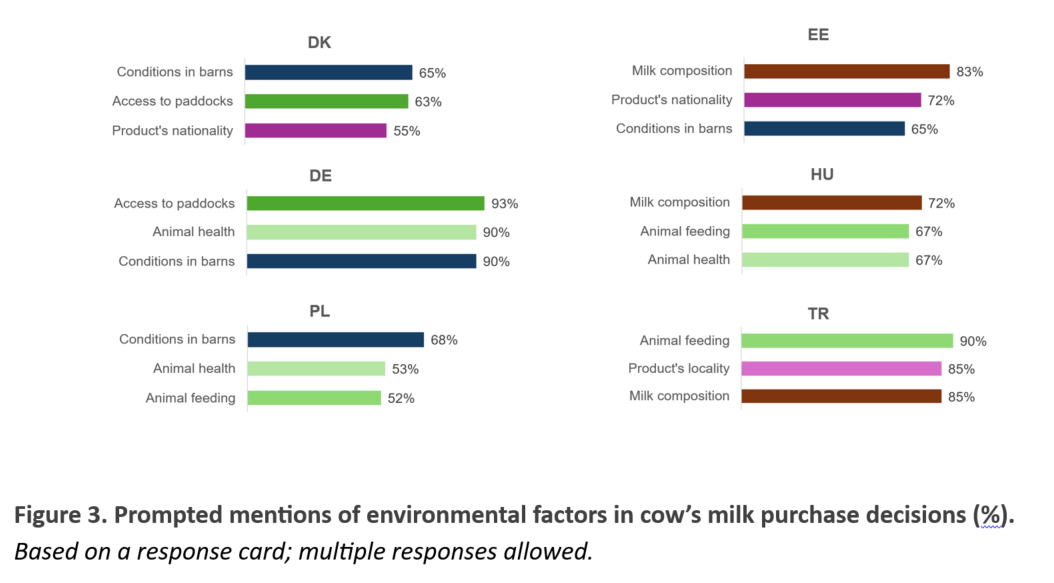
Over 40% selected animal health when shown a list of options.
Willingness to pay more
More than half of respondents said they would pay up to 30% more for milk from farms that meet high animal welfare standards — especially in Poland and Turkiye.
Animal welfare factors mentioned by consumers.
What matters most when buying cow's milk?
Despite growing awareness, traditional factors continue to drive purchasing decisions — informing how we design better information systems.
Primary buying criteria for cow's milk.
Country differences matter
Consumer priorities vary significantly by country, reflecting national cultures and purchasing habits:
Germany & Denmark: Highest sensitivity to animal welfare and organic production; consistent concern with housing, pasture, and environmental impact.
Estonia & Denmark: High importance placed on local or national origin of milk.
Poland: Strong interest in feeding practices and pasture access; strongest intent to pay more for ethically produced milk.
Hungary: Most price-sensitive and least likely to prioritize ethical concerns.
Buying for others: shared decision-making
Most consumers (77%) do not buy milk only for themselves. They shop for family or household members, so purchasing decisions must balance multiple preferences.
More than half frequently discuss shopping choices with others — making it harder for environmental or welfare values to guide final decisions when cost and familiarity also matter.
77%
Buy milk for family or household members
Information is key
Consumers want to make better choices but need the right information tools. Many expressed strong support for ethical production practices.
94%
Support stronger penalties for producers who mistreat animals
74%
Willing to boycott unethical companies
Key takeaway
Acting on ethical values is limited by the lack of clear, accessible information about how milk is produced. ET4D aims to bridge this gap with transparent, recorded data about dairy farm conditions.
Farmer survey
Farmer survey
What do dairy farmers think about technology, animal welfare, and sustainability?
Producer experiences with modern technologies, attitudes toward sustainability and animal welfare, and openness to sharing production-related data.
70Producers
7Countries
~65%Interested in monitoring
100%Value animal welfare
About the study
We surveyed dairy farmers in seven countries: Denmark, Estonia, Germany, Hungary, Israel, Poland, and Turkiye. The study included 70 producers and explored their experiences with modern technologies, attitudes toward sustainability and animal welfare, and openness to sharing production-related data.
Open to innovation — but on their own terms
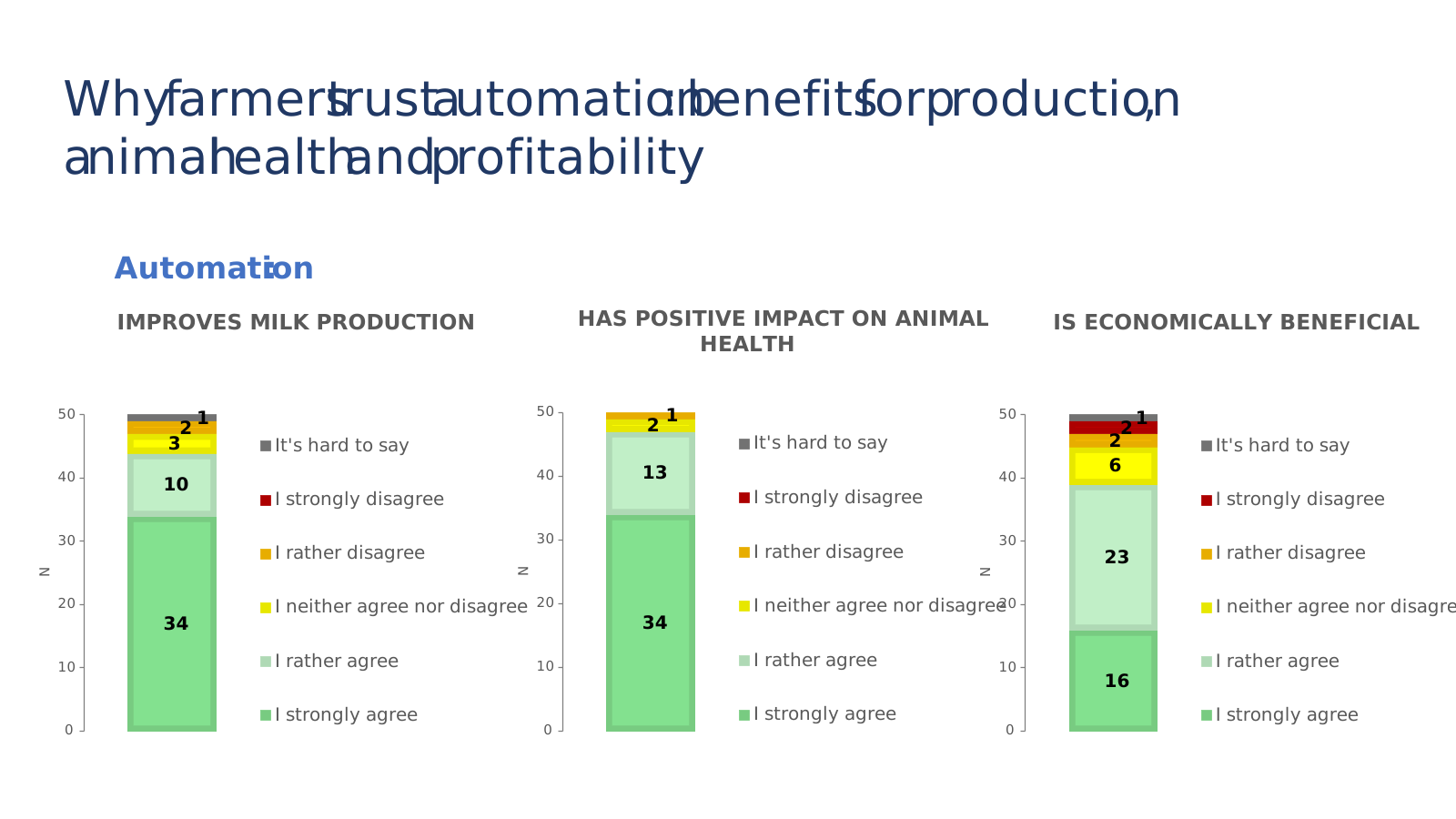
Dairy farmers are often perceived as resistant to change, but our results tell a different story. Most respondents already operate highly automated farms and use a wide range of modern technologies — from milking systems to animal health monitoring and digital herd management.
Technology in daily use
Advanced tools are already part of everyday farm operations, not a distant future.
Clear benefits recognised
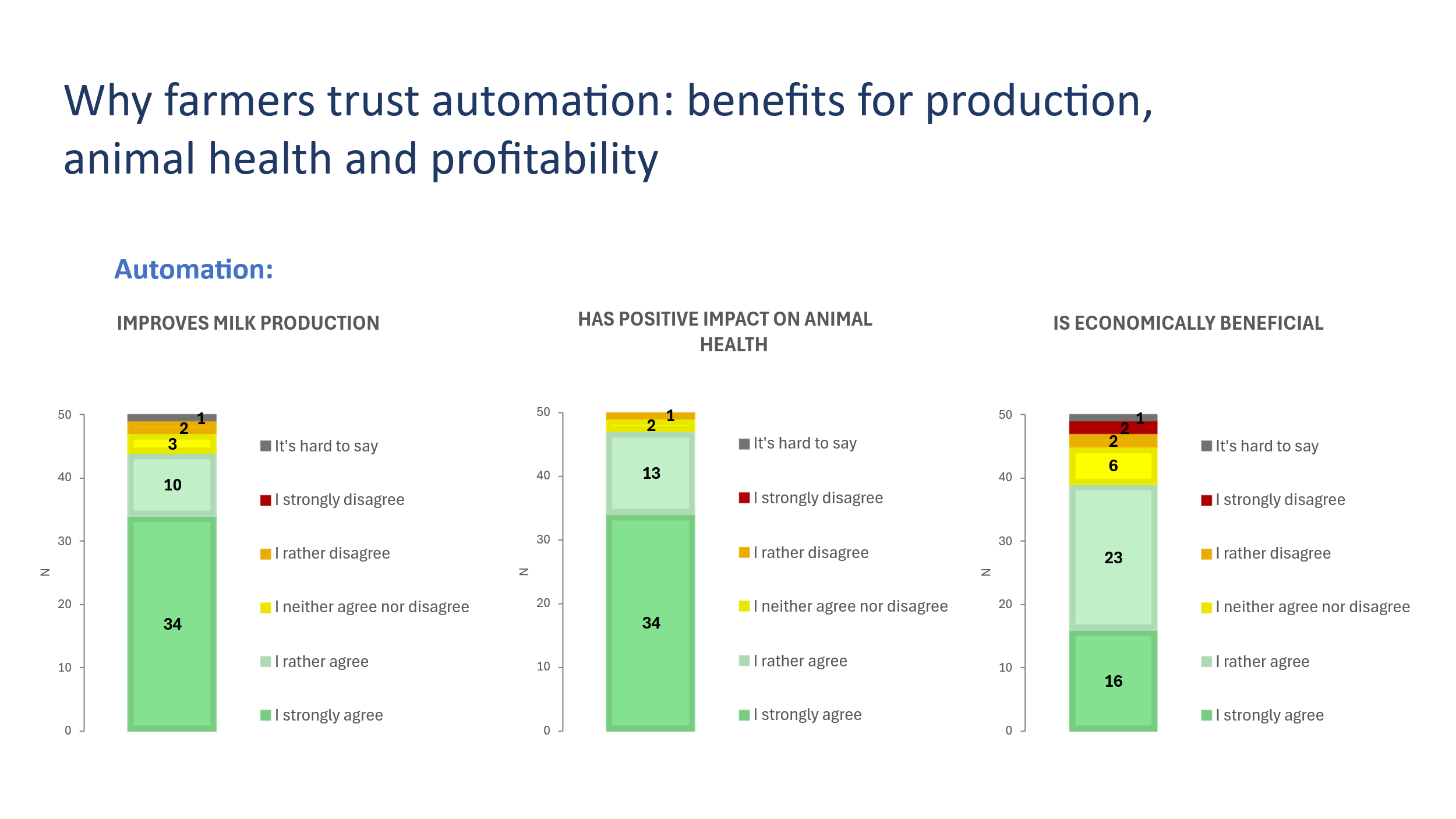
Farmers associate technology with efficiency, better herd management, time savings, and enhanced animal health.
Pragmatic adoption
They adopt new solutions when benefits are clear, practical, and economically justified — not unconditionally.
Figure 1. Farmers' perceptions of the benefits of automation: production efficiency, animal health, and economic outcomes.
Interest in new technologies — with reservations
When presented with an environmental monitoring device for barns, nearly two-thirds of farmers expressed interest in installing it — suggesting strong potential for further technological development.
Practical barriers matter
The biggest barriers are not attitudes but practical conditions: limited internet connectivity, uncertainty about integrating new tools with existing systems, and doubts about real economic returns. Adoption is less about willingness and more about feasibility.
Technology as a tool — not a goal
Farmers are not interested in raw data or complex reports. They want tools that support decision-making: warning signals, clear indicators, practical recommendations, and the ability to track trends over time.
Advisors, not measurement devices
Technologies are expected to act as advisors that guide daily decisions — not merely collect measurements.
Figure 2. Preferred format for presenting data on production conditions and their environmental impact (%).
Animal welfare: a shared value
All surveyed farmers consider animal welfare important; many believe standards should be even higher. A large share declared willingness to accept increased production costs to improve welfare conditions.
Internalised value
Welfare is not only a regulatory requirement but a deeply held value among producers.
Environmental awareness
Farmers are highly aware that production and lifestyle affect the environment — though awareness does not always translate into action.
Attitude–action gap
Sustainable change is shaped by economic pressures, infrastructure, and broader system conditions — not attitudes alone.
Transparency — with boundaries
Farmers generally support sharing information about production, especially animal welfare and farm conditions. They see transparency as increasingly expected by consumers and important for building trust.
Open to sharing
Welfare and farm-condition data are seen as valuable to share with stakeholders and the public.
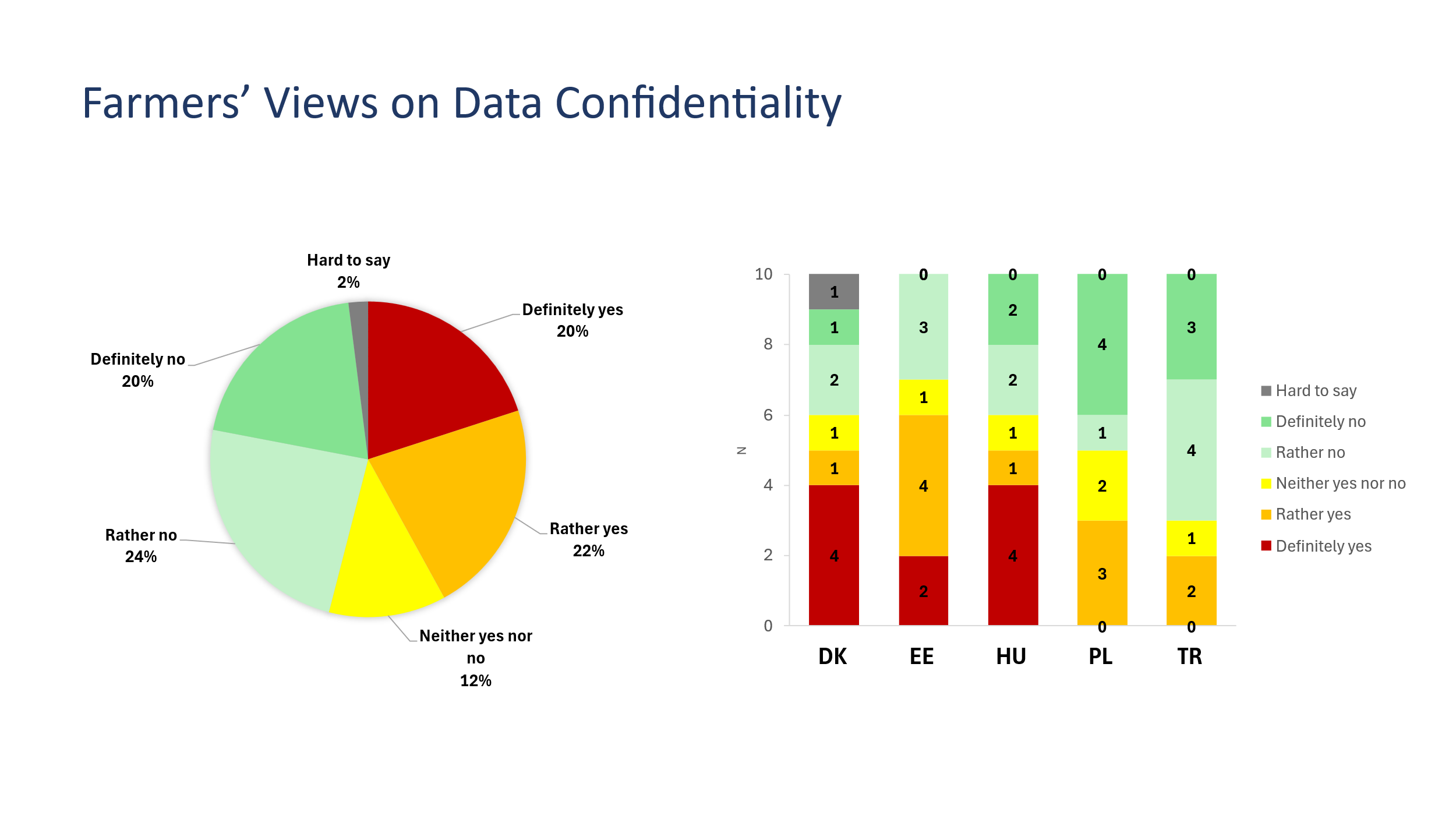
Cautious with data
Many consider certain production data confidential and hesitate to share detailed information publicly.
Economic question
Some question whether transparency leads to real financial benefits — balancing openness with control.
Figure 3. Confidentiality of farm production data.
What does this mean for the future?
Dairy farmers are not resistant to innovation — they are open, experienced, and willing to adopt new solutions. Their decisions are shaped by practical realities.
For new technologies to succeed, they must:
Provide clear and tangible benefits
Be easy to integrate into existing systems
Support everyday decision-making
Respect farmers' concerns about data and economic viability
Key takeaway
Understanding these perspectives is essential to designing tools that work — not only technologically, but also socially. ET4D bridges farmer pragmatism with consumer demand for transparency.
This is only available to Farmers and Stakeholders