Survey Reports
Understanding consumer perspectives on dairy production, environmental sustainability, and animal welfare across Europe.
About the Study
As part of the ET4D project, we conducted a comprehensive consumer survey across six European countries: Poland, Germany, Denmark, Estonia, Hungary, and Turkey. The study included 360 participants and explored consumer attitudes and behaviors related to milk and dairy products, with a particular focus on environmental sustainability and animal welfare.
What Do Consumers Think About the Environment and Cow Welfare?
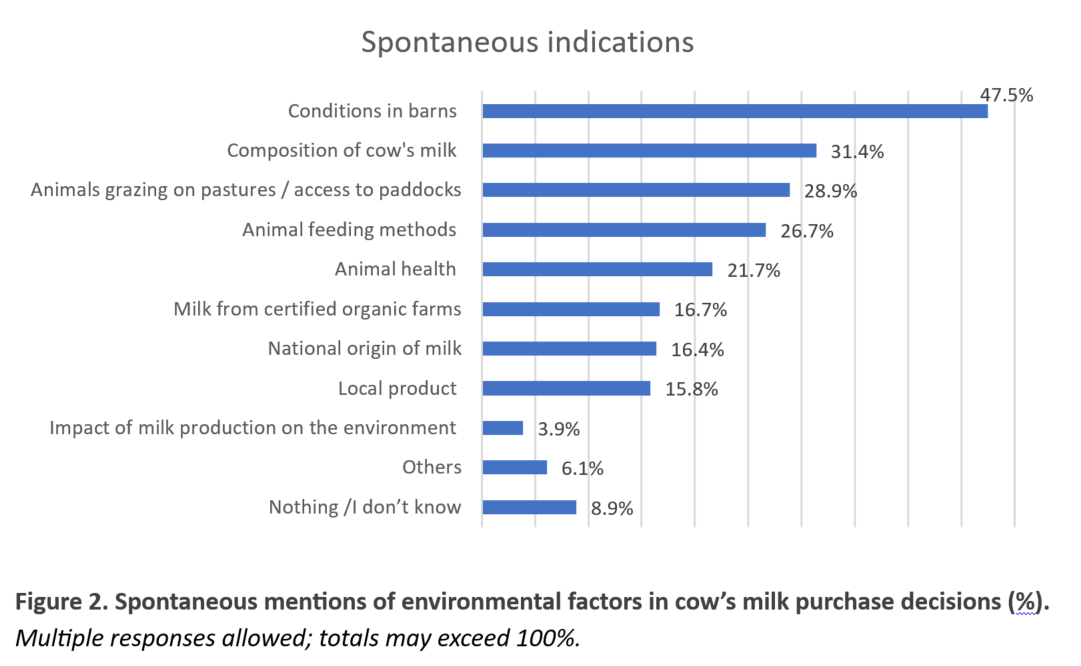
However, when it comes to purchasing decisions, traditional factors such as price, taste, and brand still dominate. Only 3.9% of respondents spontaneously mentioned the environmental impact of milk production as a consideration. This suggests a clear gap between declared values and actual shopping behavior – highlighting the need for better communication tools and clearer information.
Growing Sensitivity to Animal Welfare
Consumers are increasingly aware of how dairy animals are treated. When asked open-ended questions, nearly half of respondents mentioned housing conditions for cows as an important concern.
More than half of respondents said they would be willing to pay up to 30% more for milk labeled as coming from farms that meet high animal welfare standards. This willingness was especially strong in Poland and Turkey.
What Matters Most When Buying Cow's Milk?
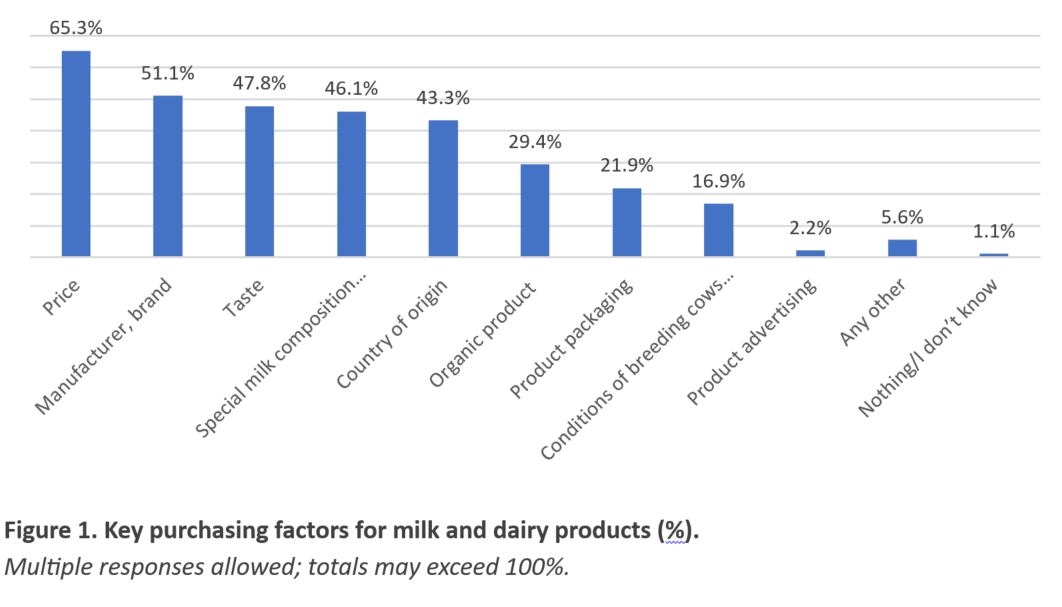
Despite growing awareness, traditional factors continue to drive purchasing decisions. Understanding these priorities helps us design better information systems.
Country Differences Matter
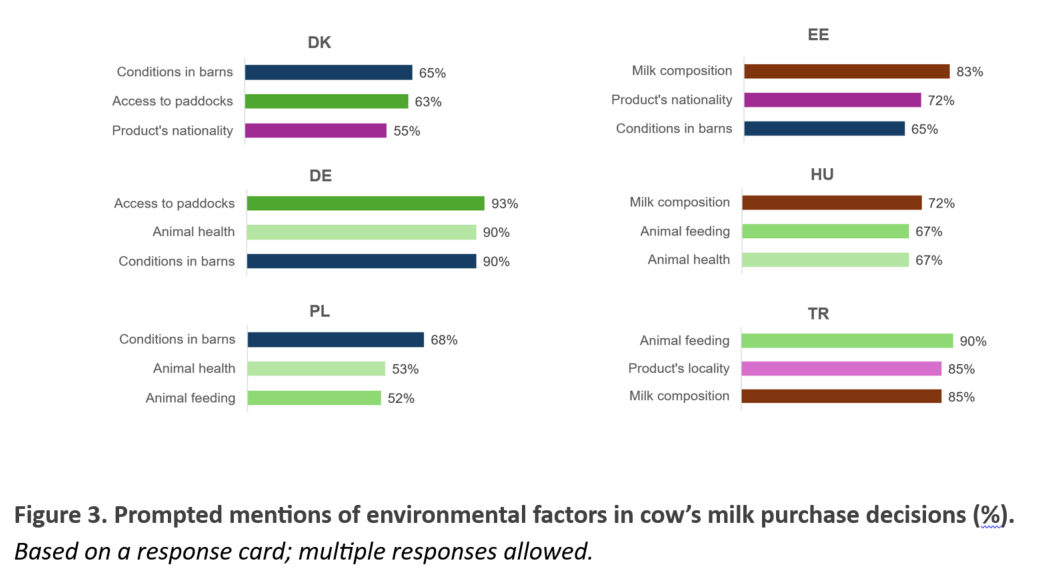
Consumer priorities vary significantly by country, reflecting national cultures and purchasing habits:
- Germany & Denmark: Highest sensitivity to both animal welfare and organic production. German respondents showed consistent concern with housing conditions, pasture access, and environmental impact.
- Estonia & Denmark: Placed high importance on the local or national origin of milk.
- Poland: Especially interested in feeding practices and pasture access. Showed the strongest intent to pay more for ethically produced milk.
- Hungary: Most price-sensitive and least likely to prioritize ethical concerns.
Buying for Others: A Shared Decision-Making Process
Another important finding is that most consumers (77%) do not buy milk only for themselves. They often shop for family members or other household members, which means that purchasing decisions must take into account multiple preferences.
More than half of respondents said they frequently discuss shopping choices with others. This dynamic makes it even harder for values like environmental impact or animal welfare to guide final decisions, especially when cost and familiarity also play a role.
Information Is Key
Consumers want to make better choices, but they need the right information tools. Many respondents expressed strong support for ethical production practices.
The ability to act on ethical values is limited by a key barrier: the lack of clear, accessible information about how milk is produced. The ET4D project aims to bridge this gap by providing transparent, real-time data about dairy farm conditions.